
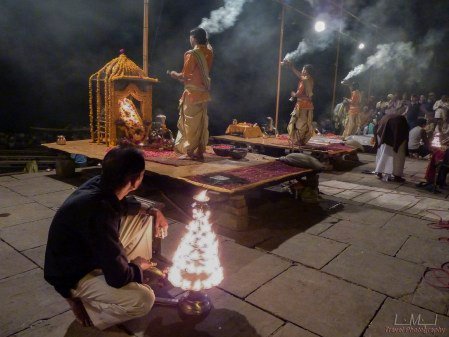
At dusk, the Puja in honor of Mother Ganga is celebrated daily at various ghats along the Ganges. The one at Dasaswamedh Ghat is spectacular. It’s the largest and most colorful and takes place every day at sunset. You’ll see many Indian tourists watching it from boats on the river. The Puja is something you absolutely shouldn’t miss.
Puja is the Hindu ritual of worship to the Gods (pronounced “puja”) and can be performed both at home and in celebrations with thousands of people. We can all do puja; it is a rite of reflection and gratitude to the Gods.
Spanish and English-speaking Tour Guide in Varanasi/Benares
Architecture and Visual Imagery
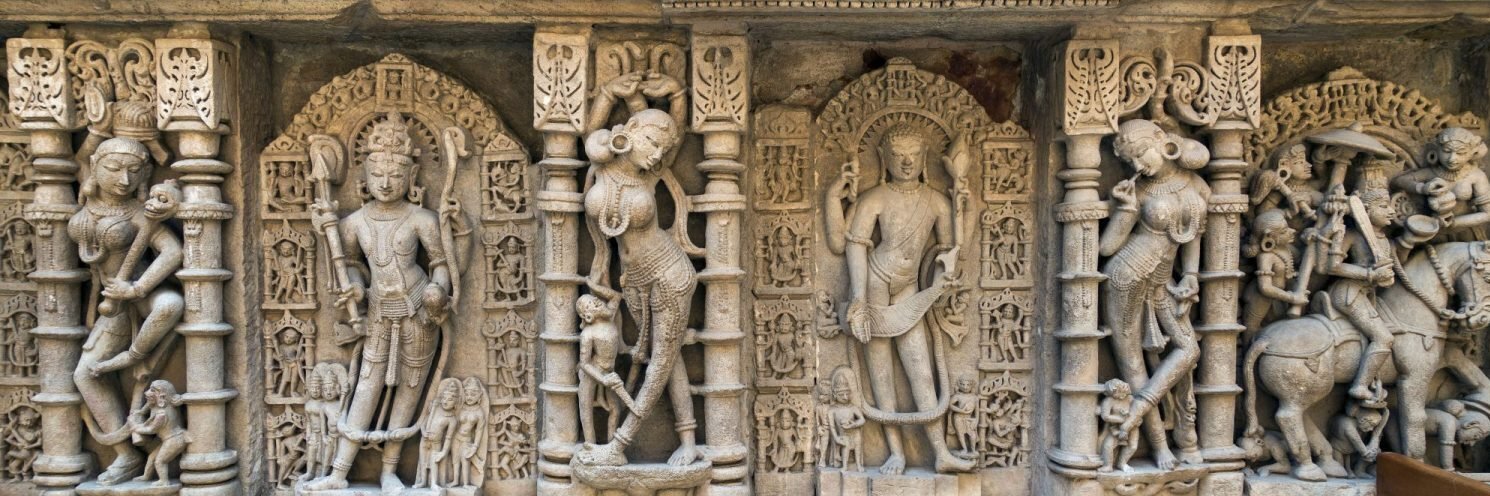
Visually, the ghats present a dramatic and mesmerizing spectacle. Rows of stone steps stretch along the river curve, flanked by ancient palaces, towering temples, ashrams, and centuries-old havelis. The architecture reflects a rich heritage, with intricate carvings, arched doorways, and domes weathered by time.
At dawn, the ghats are bathed in a soft, golden hue. The misty river reflects the early morning sun, creating a ethereal atmosphere. As the day progresses, the steps fill with an explosion of colors: the saffron robes of meditating sadhus, the bright saris of devotees, and the shifting shades of the river itself. Marigold garlands, floating clay lamps (diyas), and columns of rising incense add layers of texture and fragrance to the sensory landscape.
A Sensory and Spiritual Landscape
The ambiance of a Ganga ghat is an intense blend of sounds, sights, and emotions. In the early morning, a profound serenity coexists with a gentle buzz of activity. You hear the soft murmuring of Vedic chants, the ringing of temple bells, and the rhythmic splash of water as pilgrims take their holy dips. Devotees believe that the waters of Mother Ganga wash away accumulated sins and liberate the soul from the cycle of rebirth.
By afternoon, the ghats shift character. They become spaces for community and reflection. You will see boatmen calling out to tourists, children playing on the stone steps, dhobis (washermen) washing clothes, and elders sitting in quiet contemplation.
The Ritual of Ganga Aarti
As dusk falls, the ghats transition into their most spectacular phase, best exemplified by the Dashashwamedh Ghat in Varanasi or Har Ki Pauri in Haridwar. This is the time for the Ganga Aarti, a grand ritual of thanksgiving to the river.
Young priests clad in matching silken attire stand on raised platforms at the water’s edge. In synchronized movements, they wave massive, multi-tiered brass lamps filled with camphor. The night air fills with the powerful sound of conch shells, beating drums, and loud chanting. Hundreds of tiny, leaf-boat lamps with flickering flames are released into the river, turning the dark water into a shimmering highway of light. It is a hypnotic, deeply emotional experience that leaves onlookers in silent awe.
Life, Death, and Liberation
The Ganga ghats also provide a stark, unfiltered look at the cycle of life and mortality. Certain ghats, such as Manikarnika and Harishchandra Ghats in Varanasi, are designated cremation grounds. Here, funeral pyres burn continuously day and night.
In Hindu philosophy, dying or being cremated along the banks of the Ganges ensures Moksha (salvation). This juxtaposition of joyous spiritual celebration on one ghat and the solemnity of death on the next creates a profound atmosphere. It forces visitors to confront the transient nature of human existence, making the ghats a place of deep philosophical introspection.
In essence, a Ganga ghat is a living canvas of human faith. It is a place where time seems to stand still, offering a timeless glimpse into India’s spiritual soul.